


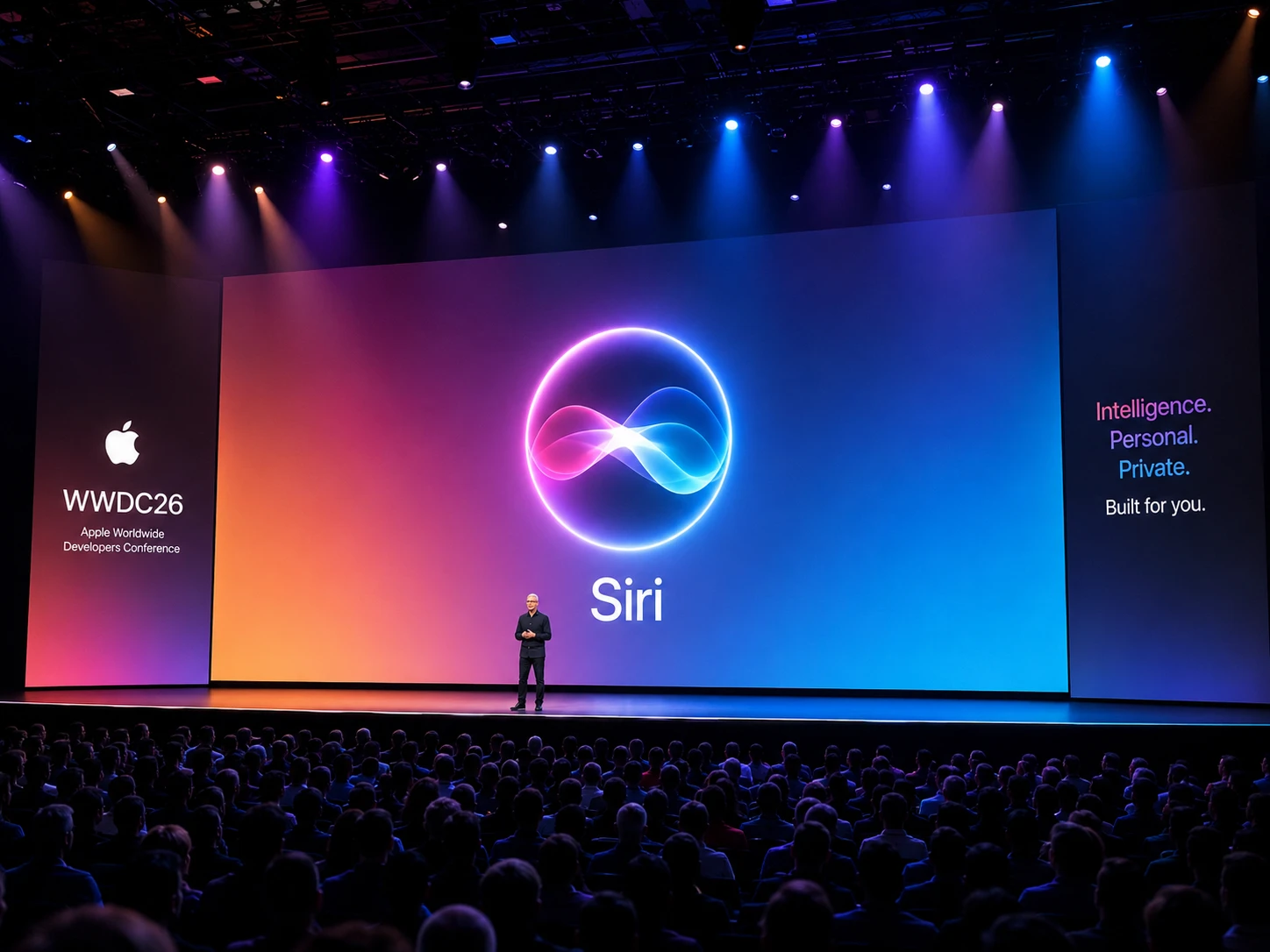
Apple unveiled a rebuilt Siri at WWDC 2026 on June 8 — the most significant AI upgrade in the assistant’s history. Powered by Google Gemini and available in a new standalone app, the new Siri can hold back-and-forth conversations, see your screen, and search through your emails and messages. iOS 27 rolls out to every iPhone back to the iPhone 11.
Apple kicked off WWDC 2026 on Monday with a keynote that finally delivered the Siri overhaul the company first promised years ago. The revamped assistant, now powered by the AI deal Apple struck with Google, is more conversational, context-aware, and available in a dedicated app for the first time. The event carries extra weight: it is Tim Cook’s final WWDC as CEO, with Apple hardware chief John Ternus taking over September 1. Apple published the full announcement Monday afternoon.
A New Siri Built Around Google’s AI
The new Siri is not just smarter — it is architecturally different. Apple’s Senior VP Craig Federighi described the shift as moving from command-response to genuine conversation: “You can go back and forth like never before and get detailed, engaging answers.” The assistant can now read whatever is on your screen, pull context from emails and messages, and handle multi-step follow-ups.
Privacy is Apple’s differentiator here. Federighi was explicit: “Data is only used to execute your request, and outside experts can continue to verify this promise at any time.” Sensitive requests run on-device or via Apple’s Private Cloud Compute — not on Google’s infrastructure. A new standalone Siri app lets users type or speak in a chatbot-style interface, with conversation history syncing across all supported Apple devices via iCloud.
The underlying model is Google Gemini, which Apple licensed earlier this year to power general knowledge queries and web-sourced answers. Apple’s own on-device Apple Foundation Models handle personal context — your calendar, messages, photos — locally.
iOS 27 Goes All the Way Back to the iPhone 11
Apple called iOS 27 its “most compatible update ever,” supporting every iPhone from the 2019 iPhone 11 onward. Performance gains are headline-worthy: photos load 70% faster, AirDrop transfers are 80% faster, and CPU scheduler improvements sharpen multitasking response across all supported devices.
The update ships alongside iPadOS 27, macOS Golden Gate, watchOS 27, tvOS 27, and visionOS 27. No new hardware was announced — Apple’s keynote was software-only from start to finish. That focus signals the company is betting its AI positioning on catching up in software rather than leading on silicon.
Liquid Glass Finally Has a Dial
Last year’s Liquid Glass UI redesign was polarizing — and Apple heard the feedback. iOS 27 lets users dial back the frosted translucency or deepen it, with a new layered rendering approach inside apps giving both users and developers more control. It stops short of reverting to the pre-Liquid Glass look, but it is a meaningful concession.
App icons get the layered Liquid Glass treatment too, building on the translucency direction rather than pivoting away. For users who disliked the heavy frosted-glass aesthetic spreading across third-party apps, Apple’s own approach stays more restrained.
Frequently Asked Questions
What is new in Siri at WWDC 2026?
Apple rebuilt Siri with Google Gemini as the underlying AI model, giving it conversational memory, screen awareness, and the ability to search personal data like emails and messages. A new standalone Siri app lets users interact in a chatbot-style interface, with conversation history syncing across devices via iCloud.
Which iPhones support iOS 27?
iOS 27 supports every iPhone from the iPhone 11 (2019) onward. Apple says this makes it the most widely compatible iOS release in the company’s history, with performance gains including 70% faster photo loading and 80% faster AirDrop transfers.
Does Apple use Google Gemini for Siri?
Yes. Apple licensed Google Gemini to handle general knowledge queries and web-sourced answers in the new Siri. Personal context — messages, calendar, photos — is processed by Apple’s own on-device Foundation Models, not sent to Google’s servers.
Is WWDC 2026 Tim Cook’s last event as Apple CEO?
Yes. Tim Cook announced in April 2026 he is stepping down as CEO on September 1, 2026, with Senior VP of Hardware Engineering John Ternus taking over. WWDC 2026 is Cook’s final major product event as chief executive.
What is Liquid Glass in iOS 27?
Liquid Glass is Apple’s translucent, frosted UI design language introduced in iOS 26 in 2025. iOS 27 adds opt-in intensity controls, letting users dial back the effect — a response to widespread feedback that the original design was too visually heavy for everyday use.
Apple’s new Siri ships with iOS 27 this fall. For a broader look at how it competes with ChatGPT and Claude, check our full AI assistant comparison.
Last Updated: June 2026


