


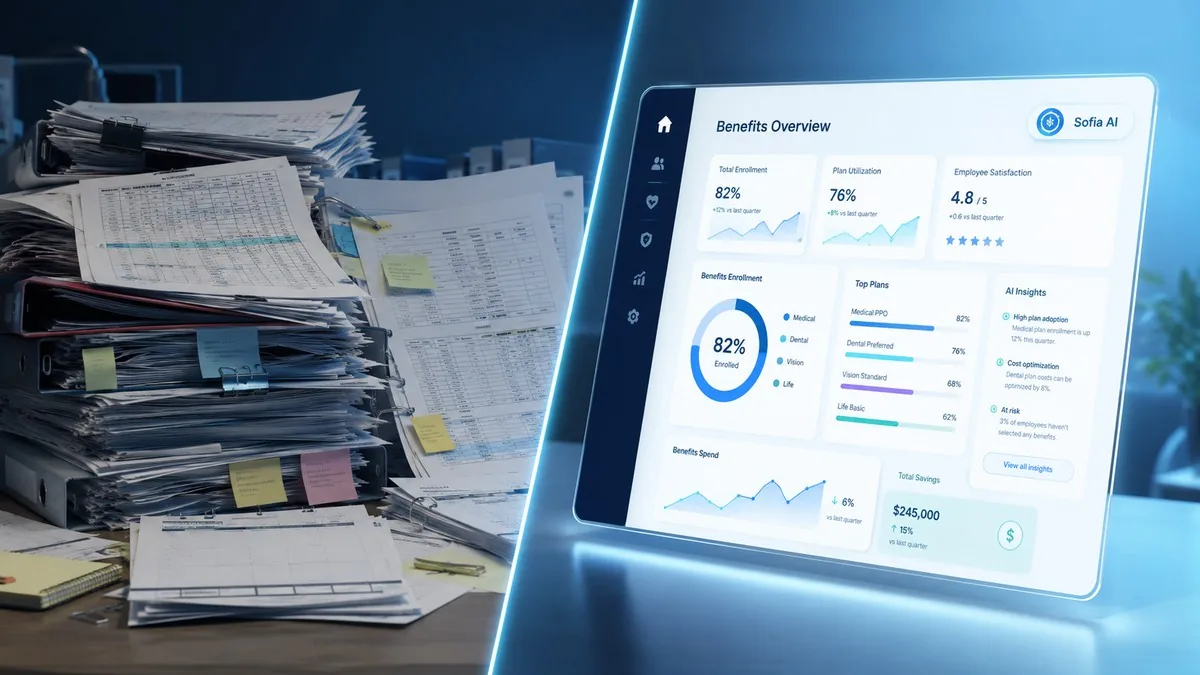
Businessolver announced AI-powered client onboarding and a Universal Data Gateway for its benefits administration platform on July 28, 2026, cutting implementation effort by a company-stated 40%. Both capabilities run on Sofia, Businessolver’s proprietary intelligence layer. The release targets the biggest barrier in HRMS software switching, such as spreadsheet-based data migration, manual reconciliation, and multi-month implementation timelines.
What Businessolver announced
Businessolver announced 2 capabilities: AI-powered client onboarding and a Universal Data Gateway. The AI onboarding capability automates data reconciliation during platform migration and replaces spreadsheet-based workflows. The Universal Data Gateway gives HR teams a single point of control for moving benefits data across connected systems, such as HRMS, payroll, and carrier platforms. According to the company’s July 28 press release, distributed via GlobeNewswire, the combined tools reduce implementation effort by 40%.
Why onboarding speed decides enterprise HR deals
Implementation cost is the primary barrier to benefits platform switching. Enterprise HR teams delay platform changes because legacy migrations consume months of staff time on data cleanup, file mapping, and error correction. A 40% reduction in implementation effort shortens that window and lowers the switching cost that keeps buyers locked into incumbent platforms, such as Workday, SAP SuccessFactors, and ADP.
The announcement extends a Sofia AI roadmap Businessolver has built since 2025. In January 2026, the company reported an 83 Net Promoter Score and described “anticipatory benefits” — AI that activates support before employees or HR teams request it. The July release adds the infrastructure layer: onboarding automation to bring clients in faster, and the data gateway to keep their benefits data portable once inside.
How the Universal Data Gateway changes benefits data migration
The Universal Data Gateway is a data integration layer that moves benefits data between Businessolver and external systems, such as payroll platforms, HRMS suites, and insurance carrier systems. Benefits data migration traditionally requires HR teams to export carrier files, normalize formats in spreadsheets, and reconcile mismatches by hand. The gateway centralizes those transfers into one controlled pipeline, and Sofia automates the reconciliation step that consumes the most staff hours.
The press release did not include executive quotes or independent verification of the 40% figure. The 40% reduction is a company-stated claim measured against Businessolver’s own prior implementation process, not an industry benchmark.
What the announcement means for HR software buyers
HR teams evaluating a benefits platform switch in 2026 should ask 3 questions of any vendor claiming AI-assisted onboarding: which migration steps the AI automates, such as file mapping, deduplication, and error flagging; what the vendor’s average go-live timeline is for companies of comparable size; and whether the data layer supports export as easily as import. Portable data cuts both ways — a gateway that eases entry into a platform also lowers the cost of leaving it, and that reduces long-term vendor lock-in risk.
Our Take
AI-powered onboarding is becoming the new free trial in enterprise HR software. A vendor that gets a client live in half the time wins the deal before competitors finish their reference calls — expect Workday, ADP, and the AI-native challengers to answer with implementation-speed claims of their own.
For Context
WithO2 has covered the shift toward agentic AI in HR platforms. Netchex launched Mesh, a set of 6 AI HR agents for deskless workforces — read our coverage in Netchex Mesh: 6 AI HR Agents Built for Deskless Workforces. For buyers comparing platforms before a migration, see Rippling vs Gusto vs BambooHR 2026: Which HRMS Is Right for You.


