


Published:
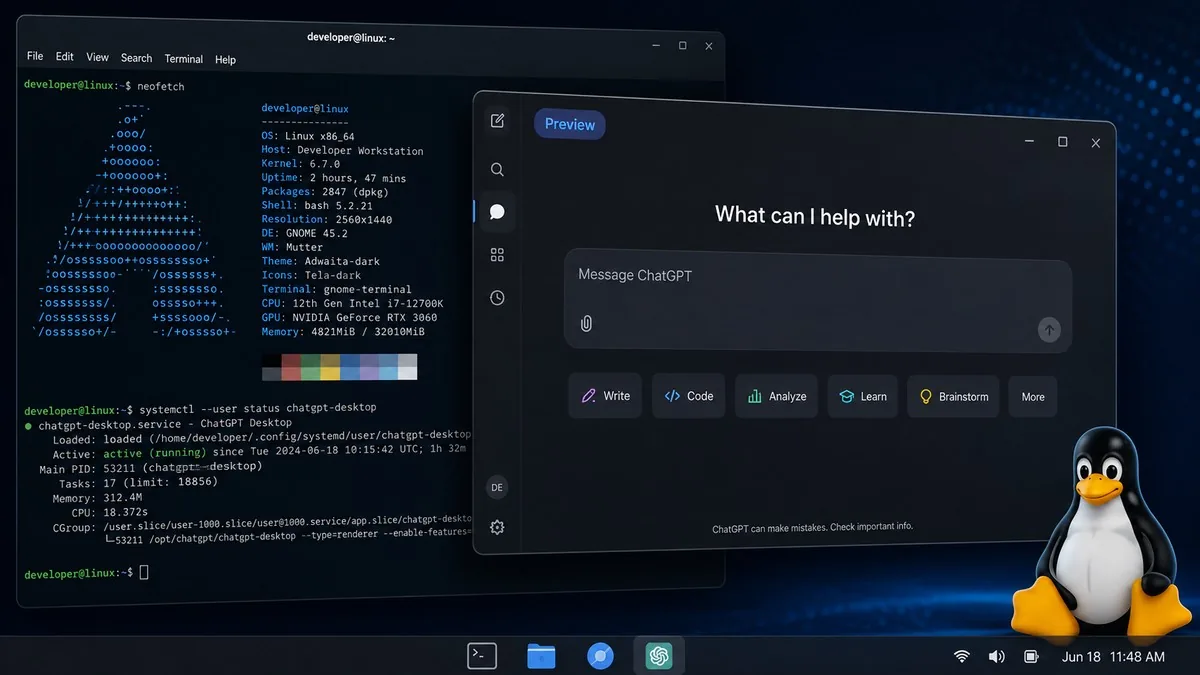
OpenAI released the ChatGPT desktop app for Linux in preview on August 11, 2026, closing the last cross-platform gap for the app and bringing Codex, its AI coding agent, to Linux workstations. The release bundles ChatGPT, ChatGPT Work, and Codex into native .deb and .rpm packages for Ubuntu 24.04/26.04 LTS, Debian 13, and Fedora 43/44, on both x64 and ARM64. An OpenAI spokesperson told The New Stack: “Linux has been one of the most-requested platforms for the desktop app, and this launch extends ChatGPT and Codex across every major desktop operating system.”
The installer adds an OpenAI-managed apt repository to the system, which pushes future updates automatically rather than requiring manual downloads. The release lands roughly one month after Anthropic shipped a Claude desktop client for Linux, making OpenAI the follower rather than the first mover in the Linux release race. SpaceXAI also pushed a Grok Bot beta to Linux on the same day, August 11, 2026.
Why the Apt Repository Matters More Than the App
The apt repository is the notable technical detail, not the desktop app itself. Installing it turns ChatGPT into part of the system’s package-management chain, which lowers friction for IT teams that already manage software through apt, but raises a review question for security teams that restrict third-party repositories by policy. Sources have not confirmed whether the repository is mandatory or removable after installation.
Codex on Linux Is the Real Story for Developer Teams
Linux workstations run most enterprise infrastructure, DevOps, and cloud-native development work, a segment AI vendors have historically underserved with browser-only tools. Codex running natively on Linux lets developers run an AI coding agent directly against enterprise repositories instead of through a browser tab, putting it in more direct competition with Cursor, which already supports Linux, and GitHub Copilot. The app remains a closed-source preview, and OpenAI has not disclosed enterprise licensing terms for ChatGPT Work on Linux, and feature parity with the Mac and web versions is not yet confirmed.
All Three Major AI Labs Reached Linux Within One Month
Anthropic shipped its Claude Linux client roughly one month before OpenAI’s release. OpenAI followed with ChatGPT and Codex on August 11, and xAI shipped Grok Bot to Linux the same day. The sequence means IT managers and CTOs standardizing on Linux — common in fintech, cloud-native companies, and research labs — can now evaluate all three major assistants as native desktop tools rather than browser-only options, a shift relevant to any team comparing the best AI tools for business deployment.
Our Take: OpenAI arriving on Linux a month after Anthropic is a mild competitive stumble for the category leader, but the more important signal for IT buyers is that the Linux AI-assistant race is now settled — all three major labs ship native apps, not browser tabs. The apt-repo auto-update strategy is aggressive by design and deserves its own paragraph in any enterprise deployment guide before rollout.
For Context: OpenAI’s Codex and Agentic Push in 2026
The Linux release extends a year of OpenAI expanding Codex’s reach into enterprise workflows, including work covered in our reporting on Codex as a security agent that fixes code vulnerabilities and the company’s broader multi-agent coordination roadmap. Bringing Codex natively to Linux gives OpenAI a foothold on the operating system where most of that agentic coding work will actually run.


