


HubSpot shares fell 12.7% in the trading sessions after OpenAI launched Presence, its enterprise AI agent platform, on July 22, 2026. The selloff hit software vendors broadly: Workday fell 9.9%, Atlassian 11.8%, Salesforce 7.7%, and Okta 4.2%, according to Startup Fortune. TD Cowen analysts cited Presence as the primary reason the IGV software index declined 3%. HubSpot shares are down approximately 48% year-to-date as of early August 2026, per Yellow.
Investors are pricing in a structural question, not a quarterly miss: whether AI agent platforms, such as OpenAI Presence, will gradually replace the seat-based subscription software they sit on top of. For businesses choosing a CRM in 2026, that question now shapes pricing, product roadmaps, and negotiating leverage.
Why OpenAI Presence Threatens Seat-Based CRM Pricing
OpenAI Presence handles customer support, sales, and internal IT workflows for large enterprises and resolves approximately 75% of support calls without a human agent. Autonomous resolution at that rate shrinks the headcount that seat-based CRM pricing depends on: a support team of 20 representatives — and 20 CRM licenses — can shrink toward 5. Startup Fortune’s analysis put the threat plainly: “A vendor that can shrink handoffs that quickly is not just selling AI features. It’s selling fewer seats, fewer queues, and fewer renewals for somebody else.”
How HubSpot Is Responding: Breeze Agents and Agent Hub
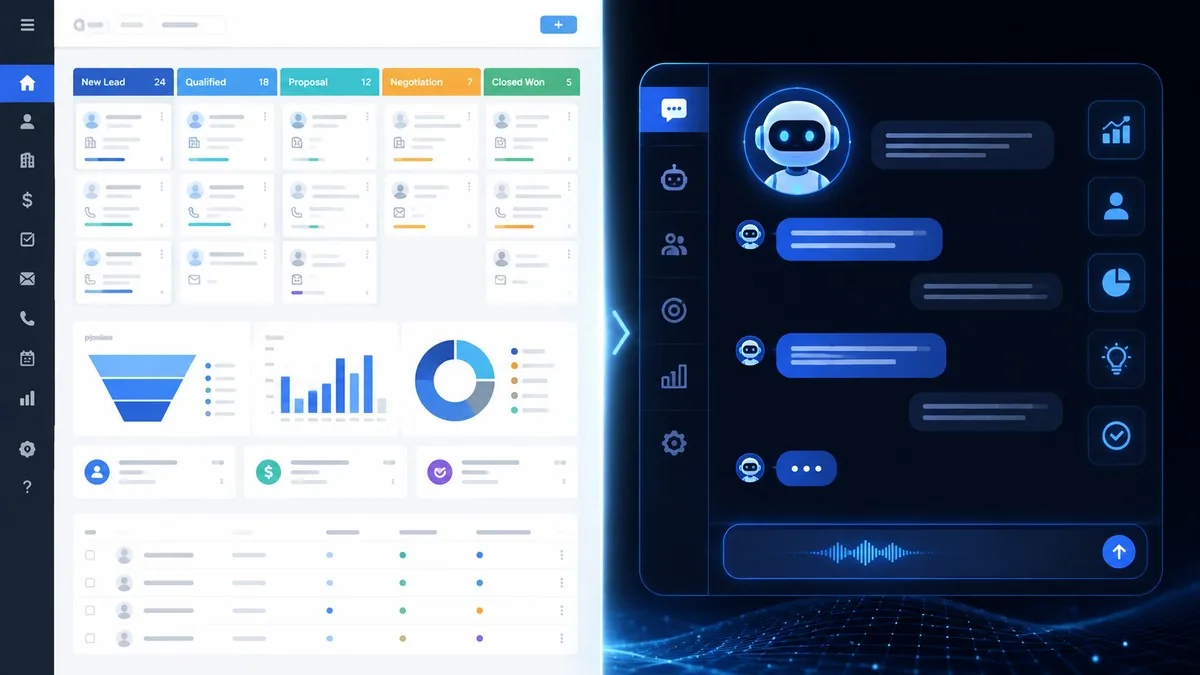
HubSpot has answered with 3 concrete product moves: Breeze AI agents shipped across the entire product suite including the free CRM tier, a new visual theme that becomes the default on August 31, 2026, and Agent Hub, a workspace where CRM teams build and share AI agent workflows. We covered the collaboration layer in detail when HubSpot Agent Hub launched — it is HubSpot’s bet that native agents inside the CRM beat external agents bolted on top. Salesforce is running the same play with Agentforce.
The Data-Pooling Reversal Buyers Should Verify
HubSpot reversed its planned customer data-pooling policy on July 5, 2026, after customer backlash, and the August 4 data-sharing launch did not go into effect. The original plan would have pooled customer contact and email engagement data into a shared commercial dataset on a default opt-in basis. CPTO Duncan Lennox titled the reversal announcement “We Got This Wrong. And We Are Fixing It.” Co-founder and CTO Dharmesh Shah told CMSWire: “We made a mistake and have taken steps to correct it.”
The episode exposed one detail buyers should act on: HubSpot’s AI model training, data enrichment, and tracking-code settings are 3 separate toggles — disabling one does not disable the others. Super Admins should verify all of them under Settings → Data Management → Data Enrichment (both the automatic and continuous-refresh toggles) plus the AI model training setting.
Update: HubSpot and OpenAI Are Now Partners — September 2026
On September 16, 2026, HubSpot reversed the adversarial dynamic entirely: it announced a deepened partnership with OpenAI, making HubSpot the first CRM to integrate directly with ChatGPT Ads, per the HubSpot official announcement. The same platform that spooked HubSpot investors in July is now HubSpot’s co-selling partner.
The practical meaning for CRM buyers: you can now build, launch, and measure ChatGPT ad campaigns inside the HubSpot dashboard — the same system where you track contacts, deals, and customer conversations. When a prospect clicks a ChatGPT ad and eventually closes as a customer, HubSpot attributes the closed deal back to that ad with full CRM data. No other CRM currently offers this closed-loop attribution for ChatGPT Ads.
The HubSpot connector for ChatGPT is already the most popular CRM connector for ChatGPT, with 250% growth in weekly active users since launch, according to HubSpot. The updated connector now supports running email campaigns, creating landing pages for ads, analyzing closed-won deals, optimizing for AI search, and understanding lead progression — all from inside a ChatGPT conversation. Tech Informed confirmed HubSpot is the first CRM partner for ChatGPT Ads globally.
Brian Landsman, VP of Global Partnerships at OpenAI, said: “Putting AI to work shouldn’t require businesses to rebuild the way they work. Connecting ChatGPT with the customer knowledge in HubSpot helps teams do more with what they already know, from creating a campaign to preparing for a customer conversation.”
Duncan Lennox, HubSpot’s Chief Product and Technology Officer, said: “AI shouldn’t just benefit the biggest companies. With our HubSpot connector for ChatGPT, new ChatGPT ads integration, and new AI Growth Bundle offer, we’re giving every scaling business a real shot at showing up where buyers are, understanding what’s working, and acting on it quickly.”
AI Growth Bundle: The Time-Sensitive Offer for New Accounts
HubSpot is packaging the partnership announcement with a limited-time AI Growth Bundle expiring September 30, 2026. For new accounts opened before that date: HubSpot Starter plus ChatGPT Business credits at up to 65% off for one year; ChatGPT Business seats on a buy-one-get-one-free basis for one year; and a $750 match on ChatGPT Ads spend. HubSpot’s own data claims teams using its “Growth Context” framework see 3.6× more MQLs, 3.2× more deals won, and 2× more tickets closed — figures sourced from HubSpot’s internal analytics, not an independent audit. These terms require a separate sign-up and are not applied automatically to existing accounts.
Should You Still Buy HubSpot in 2026?
Yes, HubSpot remains a viable CRM purchase in 2026 — and the September partnership news makes the case stronger for SMBs. Seeking Alpha upgraded HubSpot after the July drop with the note “Limited Long-Term AI Disruption Expected,” and the ChatGPT Ads integration answers the disruption question directly: HubSpot is now embedded in the OpenAI ecosystem rather than threatened by it. Buyers should push on discounts and contract length given the 48% year-to-date stock pressure, and factor in the ChatGPT Ads attribution moat — if your CRM and your ad platform share a data layer, switching costs rise materially. The evaluation itself has changed shape: choosing a CRM in 2026 is inseparable from choosing among the best AI agents for business tasks, because the agent layer determines how many CRM seats a team needs at all.
Frequently Asked Questions
Is HubSpot still a good buy after the OpenAI Presence selloff?
Yes. HubSpot’s 48% year-to-date decline as of August 2026 reflects investor uncertainty about AI disruption, not product failure. The September 2026 partnership with OpenAI — making HubSpot the first CRM to integrate ChatGPT Ads — directly addresses that uncertainty. Seeking Alpha upgraded HubSpot after the July selloff, citing limited long-term AI disruption risk.
What is the HubSpot ChatGPT Ads integration?
The HubSpot ChatGPT Ads integration lets businesses build, launch, and measure ChatGPT ad campaigns directly inside HubSpot’s CRM dashboard. It provides full attribution — you can trace a closed deal back to the ChatGPT ad that started the conversation. No other CRM currently offers this. It launched September 16, 2026.
What is the HubSpot AI Growth Bundle and when does it expire?
The AI Growth Bundle is a time-limited offer for new HubSpot accounts opened by September 30, 2026. It includes HubSpot Starter plus ChatGPT Business credits at up to 65% off for one year, buy-one-get-one-free ChatGPT Business seats for one year, and a $750 match on ChatGPT Ads spend. Existing customers must sign up separately — it is not applied automatically.
Does OpenAI Presence threaten HubSpot’s business model?
OpenAI Presence resolves approximately 75% of enterprise support calls without a human agent, which shrinks the headcount behind seat-based CRM pricing. However, the September 2026 OpenAI-HubSpot partnership signals a shift from competition to co-selling: HubSpot is now the preferred CRM connector for ChatGPT, with 250% growth in weekly active users since launch.
What data privacy settings should HubSpot buyers verify?
HubSpot has three separate data controls: AI model training, data enrichment, and tracking-code settings. Disabling one does not disable the others. Super Admins should check Settings → Data Management → Data Enrichment for both the automatic and continuous-refresh toggles, plus the AI model training toggle. HubSpot reversed its data-pooling plan after backlash in July 2026.
For Context
WithO2 covered the platform behind the original selloff in OpenAI Presence: The Enterprise AI Agent Platform Resolving 75% of Calls, which detailed the launch, its enterprise targeting, and the autonomous-resolution rate that spooked SaaS investors. The September partnership announcement represents a significant reversal from that adversarial dynamic.
Related Coverage
- Choosing software under AI disruption? Start with our guide to the 15 best AI tools for business in 2026.
- To see what agent deployments look like in practice across support, sales, and operations, read our 15 AI agent examples across industries.
- For a deeper comparison of CRM options, see our guide to choosing a CRM in the current AI landscape.


