


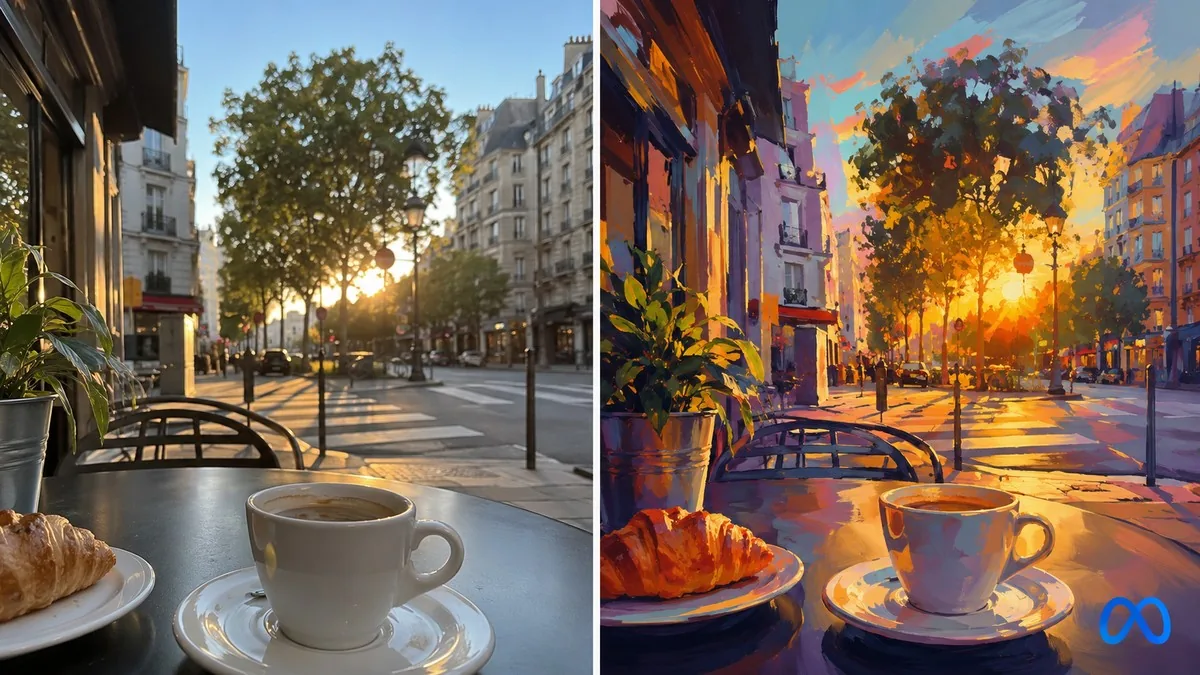
Meta Muse Image is Meta’s first AI image generator, launched July 7, 2026 and built by Meta Superintelligence Labs. It runs free inside the Meta AI app, Instagram Stories, and WhatsApp, and can generate, edit, and restyle photos from a text prompt. It can also remix other users’ public Instagram photos by default, with opt-out buried in settings.
Meta rolled out Muse Image on July 7, 2026 — the first AI image model from Meta Superintelligence Labs, the research unit led by Scale AI founder Alexandr Wang. Meta announced the model as a free feature across Meta AI, Instagram Stories, and WhatsApp, reaching the billions of people already on those apps.
The launch matters less for its image quality — Meta published no benchmarks — than for how it treats your photos. By default, Muse can restyle and remix any public Instagram image, and you have to actively turn that off.
The First Model Out of Alexandr Wang’s Superintelligence Labs
Muse Image is the first public product from Meta Superintelligence Labs, the AI unit Meta built around Alexandr Wang after his high-profile move from Scale AI. Internally, the model was code-named “Mango,” according to TechCrunch.
The timing is not an accident. In early July, Mark Zuckerberg told staff that AI agents “haven’t progressed as quickly as he’d hoped.” Muse is the visible counterpunch — a consumer model people can tap in Instagram today, rather than the slower agentic infrastructure Meta has struggled to ship.
Meta pitched concrete uses in its announcement: “Ask it to mock up an image of you in front of a historical landmark, cleanly erase a photobomber from the background of a shot, or write a custom prompt to build a functional QR code.” A companion feature, Muse Spark, handles multi-step generation with layout planning and visual reference blending.
The Feature That Has Users Nervous: Remixing Public Instagram Photos
Here is the part drawing pushback. Muse can take another user’s public Instagram photos and manipulate them with AI, and that behavior is on by default — you opt out in settings, not in, per SiliconAngle.
Users started pushing back within hours of launch. The complaint echoes earlier fights over Meta training AI on user content, and it lands the feature squarely in front of European privacy regulators who have already scrutinized Meta’s data practices for years.
To be clear about what has not been confirmed: Meta’s sources reviewed here do not state that Muse trains on your private data, and Meta has published no pricing beyond “free up to a limit.” Those gaps are worth watching as details emerge.
Free — Up to a Point
Meta calls “everyday creation” free, but says heavier use past an unspecified cap will require a subscription plan. It has not said what that plan costs. Muse Video is already in development, per TechCrunch, signaling Meta wants the full text-to-media stack, not just stills.
Meta’s real edge isn’t the model — it’s distribution. OpenAI’s DALL-E lives in ChatGPT, Google’s Imagen sits in Gemini, and Adobe has Firefly, but none ship inside apps that 3+ billion people already open daily. Muse also plugs into Facebook Marketplace for interior-decoration mockups and can generate working QR codes.
Frequently Asked Questions
What is Meta Muse Image?
Meta Muse Image is Meta’s first AI image generation model, launched July 7, 2026 by Meta Superintelligence Labs. It creates and edits images from text prompts and is available free inside the Meta AI app, Instagram Stories, and WhatsApp. It supports photo editing, prompt-based effects, and functional QR code generation.
Is Meta Muse Image free?
Everyday creation is free, according to Meta. Beyond an unspecified usage limit, Meta says a paid subscription plan is required. As of July 2026, Meta has not published the price of that plan or the exact free-tier cap.
Can Muse Image use my Instagram photos?
Yes, by default. Muse can remix and restyle public Instagram photos with AI, and users must actively opt out in settings to prevent it. This default-on behavior is the main reason the launch has drawn privacy criticism.
Who built Muse Image?
Muse Image was built by Meta Superintelligence Labs, the research unit led by Scale AI founder Alexandr Wang. It is the lab’s first public product and was code-named “Mango” internally, per TechCrunch.
How does Muse Image compare to DALL-E and Google Imagen?
Meta has not published benchmark comparisons, so there is no verified quality ranking yet. Meta’s differentiator is distribution rather than raw model performance — Muse ships inside Instagram, WhatsApp, and the Meta AI app, which together reach more than 3 billion people.
Muse Image is Meta’s clearest consumer-AI move of 2026, and its opt-out photo remixing will likely define the story more than its image quality. For how Meta’s assistant stacks up against rivals, see our guide to the best AI subscription in 2026, and our earlier coverage of Meta’s Watermelon AI model and DeepSeek’s Janus-Pro image generator.


