


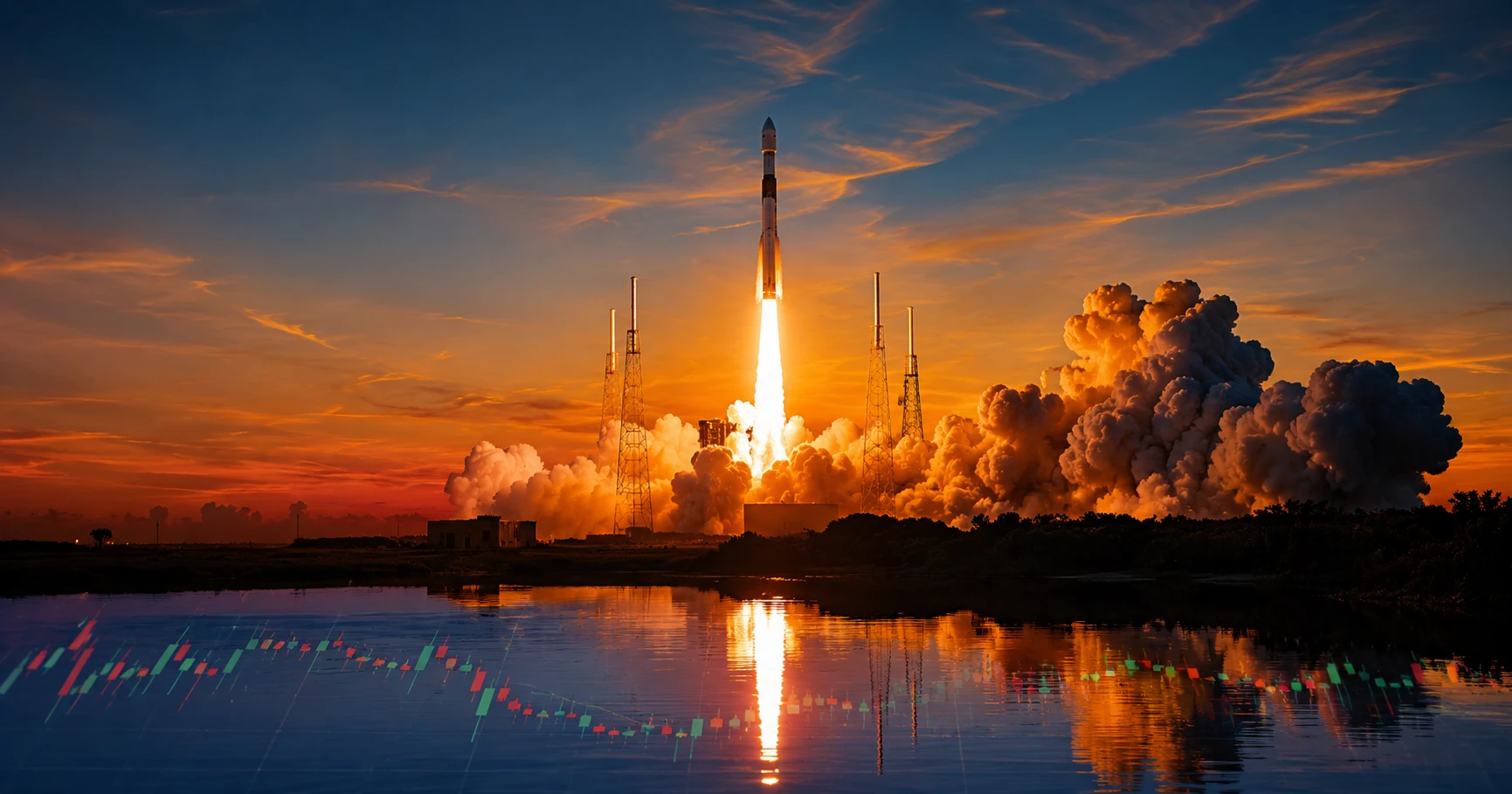
📅 Update — June 12, 2026: SpaceX priced its IPO at $135 per share on June 11 and began trading on Nasdaq as SPCX today — the first day of trading. This is now the largest US IPO in history. Original story published June 7, below.
SpaceX launched its IPO roadshow on June 4, 2026, targeting a fixed price of $135 per share and a $75 billion raise at a $1.77 trillion valuation — which would make it the largest IPO in history, more than triple Alibaba’s record 2014 US listing. Shares priced after market close on June 11 and began trading on Nasdaq under the ticker SPCX on June 12, 2026.
A Fixed Price — and a Wall Street Standoff
Most mega-cap IPOs offer a price range and let institutional demand set the final number. SpaceX IPO 2026 works differently: $135, fixed, take it or leave it. That kind of confidence from a private company is rare — and immediately polarising.
At least one prominent Wall Street analysis puts fair value closer to $60–70 per share, citing xAI’s $14 billion cash burn against only $3.2 billion in 2025 revenue as the primary drag. Bulls point to Starlink’s $4.4 billion in operating income as the real anchor — and argue xAI’s trajectory justifies the premium. Goldman Sachs is leading a 21-bank syndicate for the deal, the largest IPO banking team assembled in years.
The 30% Retail Bet
SpaceX is routing 30% of the IPO float directly to retail investors through Robinhood, Fidelity, and Charles Schwab — three times the standard allocation for a mega-cap offering. Retail investors hold longer, creating a buffer against early institutional selling pressure. It also fits Musk’s playbook of building direct retail loyalty at scale.
What’s Actually Inside the $1.77 Trillion Box
SpaceX reported $18.7 billion in 2025 revenue after completing its all-stock merger with xAI in February 2026. The profitable core is Starlink: $11.4 billion in revenue, $4.4 billion in operating income. The drag is xAI, which consumed roughly $14 billion in cash while generating only $3.2 billion in revenue — a gap the S-1 doesn’t fully resolve.
One data point investors will study: Anthropic is paying SpaceX $1.25 billion per month for compute through 2029. That’s $15 billion per year in committed cloud revenue — a meaningful offset to xAI’s losses and a sign that SpaceX’s infrastructure business has real enterprise demand.
The 2026 AI IPO Race
SpaceX isn’t alone. Anthropic confidentially filed its S-1 on June 1 at a $965 billion valuation. OpenAI is readying its own filing. Goldman Sachs analysts project US IPO proceeds could hit $160 billion in 2026 — a 4x jump from 2025’s $45 billion — driven almost entirely by these three companies competing for the same institutional capital.
Frequently Asked Questions
When does the SpaceX IPO 2026 price and when does SPCX start trading?
SpaceX prices shares after market close on June 11, 2026. SPCX begins trading on Nasdaq on June 12.
What is SpaceX’s IPO price per share?
SpaceX set a fixed price of $135 per share — unusual for an offering of this size. The offering covers 556.6 million shares targeting a $75 billion raise at a $1.77 trillion valuation.
What does xAI have to do with the SpaceX IPO?
SpaceX completed an all-stock merger with Elon Musk’s AI company xAI in February 2026. xAI — maker of the Grok model — is now part of SpaceX’s corporate structure, and its financials appear in the S-1.
Can retail investors buy SPCX at the IPO price?
Yes. SpaceX is allocating 30% of the float to retail investors through Robinhood, Fidelity, and Charles Schwab — three times the standard retail allocation for a mega-cap IPO.
Would SpaceX’s IPO be the largest in history?
Yes, if it prices at target. A $75 billion raise would surpass Saudi Aramco’s 2019 IPO (roughly $29 billion) and Alibaba’s 2014 US listing ($25 billion), making it the largest in recorded history.
SPCX prices June 11, trades June 12. For the full picture on the 2026 AI IPO wave, see our coverage of the OpenAI and Anthropic filings.
Last Updated: June 2026


