Close Menu
WithO2WithO2

    Subscribe to Updates

    Get the latest AI News Tools Updates in your Inbox

    What's Hot

    Apple WWDC 2026 AI Features Preview: Siri 2.0, iOS 27, and What to Expect

    June 4, 2026

    OpenAI Files Confidential S-1 for Trillion IPO — What Investors Need to Know

    June 4, 2026

    Trump Just Signed an AI Order — What It Means for OpenAI and Google

    June 4, 2026

    Subscribe to Updates

    Get the latest creative news from FooBar about art, design and business.

    Facebook X (Twitter) Instagram
    Facebook X (Twitter) Instagram
    WithO2WithO2
    • AI
    • Blog
    • Business Software
    • Trending News
    • Stories
    WithO2WithO2
    Home » Trending News
    Trending News

    Trump Just Signed an AI Order — What It Means for OpenAI and Google

    By Amitabh SarkarJune 4, 20263 Mins Read1
    Facebook Twitter Pinterest LinkedIn Tumblr Email
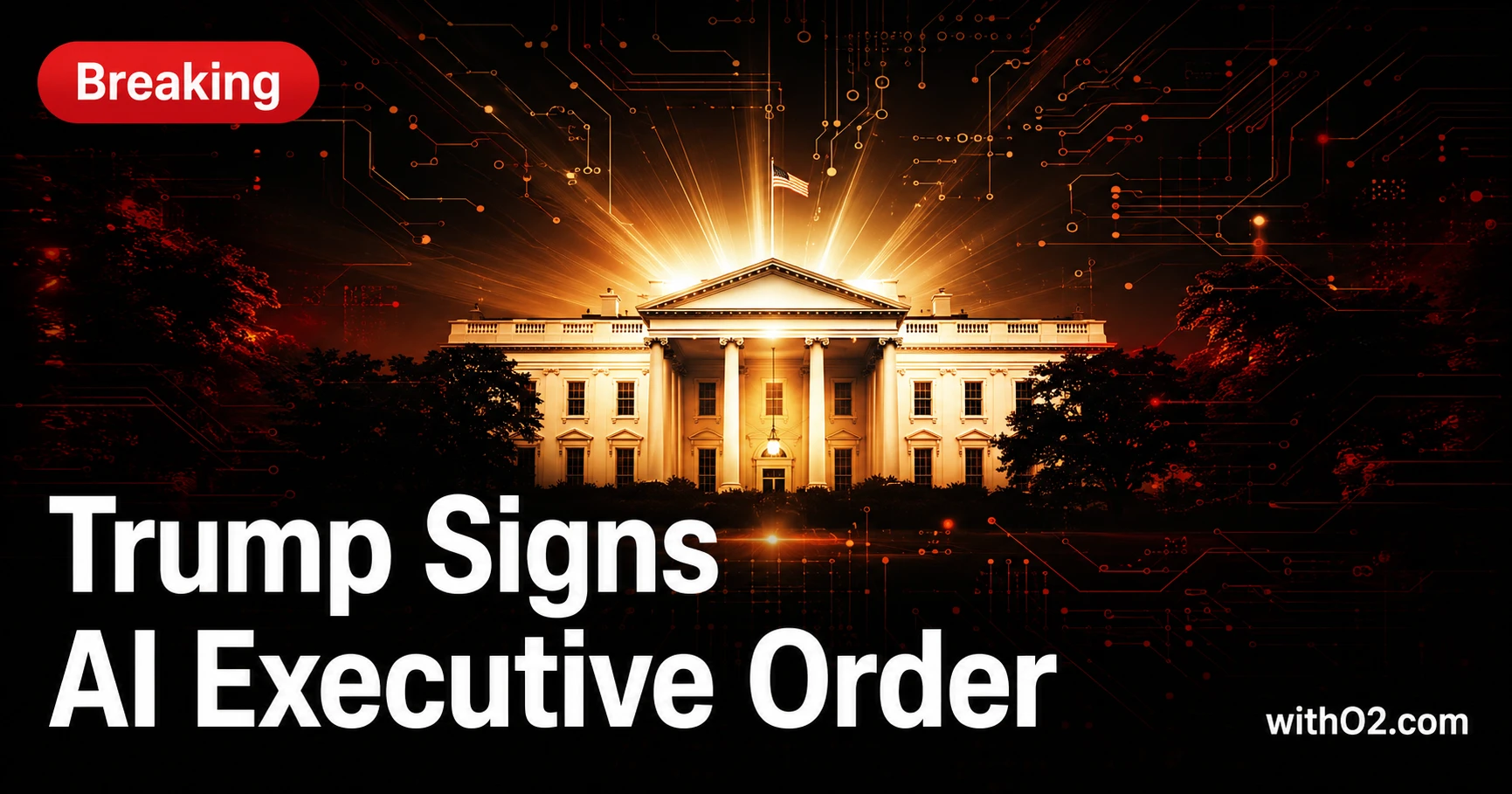
    Trump AI executive order 2026 — White House artificial intelligence policy announcement
    President Trump signed an AI executive order on June 3, 2026, asking AI companies to voluntarily submit models for government review before launch.
    Share
    Facebook Twitter LinkedIn Pinterest Email

    President Donald Trump signed a sweeping artificial intelligence executive order Tuesday, directing federal agencies to build AI testing infrastructure and asking companies like OpenAI, Google, and Anthropic to voluntarily submit their most powerful models for government review up to 30 days before public release. The move marks a significant shift in the White House’s approach to AI governance — even a deregulation-minded administration now sees unvetted frontier AI as a national security risk. The order stops short of mandating compliance, leaving the final call entirely to the companies.

    Trump AI executive order signed June 2026
    President Trump signed the AI executive order on June 3, 2026. (CNBC/Reuters)

    According to CNBC and the official White House order, the directive asks AI developers to share advanced models with the government before launch — and to collaborate with the administration on selecting “trusted partners” who get early access specifically to probe for cybersecurity and national security risks. An earlier draft had required a 90-day window; industry pushback trimmed it to 30.

    Table of Contents

    Toggle
    • What the Order Actually Does
    • Why the Timing Matters
    • Our Take

    What the Order Actually Does

    Federal agencies are directed to develop benchmarks for assessing AI models’ cyber capabilities and stand up an “AI cybersecurity clearinghouse” — a shared repository for vulnerability information across frontier systems. The order also pushes agencies to accelerate AI adoption in critical infrastructure: rural hospitals, community banks, local utilities, and national security systems all get explicit mention. This is the carrot that accompanies the voluntary review ask.

    The administration is threading a needle. The Trump White House has generally resisted the kind of hard compliance mandates that regulators in the EU have pursued, and the final order reflects that ideology — there is no enforcement mechanism, no penalty for non-participation, and no binding pre-release review process. Companies that choose to cooperate get goodwill in Washington; those that don’t face no legal consequence.

    Why the Timing Matters

    The order drops at a pivotal moment for the AI industry. Anthropic’s Mythos model — capable of autonomously completing expert-level hacking tasks — is weeks from broad release. Anthropic filed a confidential S-1 with the SEC on June 1, and OpenAI is targeting its own IPO later this year. Both companies need federal goodwill as they approach public markets and compete for government contracts. Microsoft, which unveiled its MAI model family at Build 2026 just hours before Trump signed the order, faces the same calculus.

    The voluntary review window is unlikely to materially slow any of these releases — 30 days of pre-release access is a small price for a company that wants to be seen as a responsible national security partner. The real question is whether the AI cybersecurity clearinghouse produces anything actionable, or becomes another government body that publishes reports nobody reads.

    Our Take

    This is best understood as a defensive political move, not a crackdown. A voluntary regime with no enforcement mechanism is less a regulatory guardrail and more a paper trail that lets the administration say it acted if something goes wrong. For the major labs, playing along is nearly costless and potentially lucrative — it signals trustworthiness to federal procurement officers at exactly the moment they’re eyeing billion-dollar government AI contracts. Whether the clearinghouse becomes a genuine early-warning system for AI vulnerabilities or a bureaucratic placeholder is the story to watch through the rest of 2026.

    ⚡ Quick Summary: Trump AI Executive Order
    Companies are asked — not required — to let the US government review new AI models for up to 30 days before launch. Agencies must create AI testing benchmarks and an AI cybersecurity clearinghouse. No penalties for non-participation. Primary goal: national security and critical infrastructure protection, not consumer AI regulation.

    Share. Facebook Twitter Pinterest LinkedIn Tumblr Email
    Amitabh Sarkar
    • Website

    I am a software engineer, I have a passion for working with cutting-edge technologies and staying up-to-date with the latest developments in the field. In my articles, I share my knowledge and insights on a range of topics, including business software, how to set up tools, and the latest trends in the tech industry.

    Related Posts

    Apple WWDC 2026 AI Features Preview: Siri 2.0, iOS 27, and What to Expect

    June 4, 2026

    OpenAI Files Confidential S-1 for Trillion IPO — What Investors Need to Know

    June 4, 2026

    OpenAI Is Now on AWS — What It Means for Enterprises Already Running in the Cloud

    June 4, 2026

    Comments are closed.

    Don't Miss
    Trending News

    Apple WWDC 2026 AI Features Preview: Siri 2.0, iOS 27, and What to Expect

    By Amitabh SarkarJune 4, 2026

    Apple’s WWDC 2026 keynote lands on June 8 — one week from today — and…

    OpenAI Files Confidential S-1 for Trillion IPO — What Investors Need to Know

    June 4, 2026

    OpenAI Is Now on AWS — What It Means for Enterprises Already Running in the Cloud

    June 4, 2026

    Microsoft Built Its Own AI Models — and One Already Matches Claude Opus on Coding

    June 4, 2026

    Subscribe to Updates

    Get the latest creative news from SmartMag about art & design.

    Stay In Touch
    • Facebook
    • Twitter
    • Pinterest
    • Instagram
    Our Picks

    12 Best Deepfake Apps and Software 2026 (Tested & Compared)

    March 7, 2023

    Best long-form AI writer 2023 for writing full blog articles

    January 29, 2023

    Best CRM Software for Insurance Agencies 2026: Top 10 Compared

    January 26, 2023

    Elevate Your Filmmaking with the Best Video Editing editing software for Filmmakers on the Market in 2023

    January 23, 2023
    Editors Picks

    Apple WWDC 2026 AI Features Preview: Siri 2.0, iOS 27, and What to Expect

    June 4, 2026

    OpenAI Files Confidential S-1 for Trillion IPO — What Investors Need to Know

    June 4, 2026

    OpenAI Is Now on AWS — What It Means for Enterprises Already Running in the Cloud

    June 4, 2026

    Microsoft Built Its Own AI Models — and One Already Matches Claude Opus on Coding

    June 4, 2026
    About Us
    About Us

    Your Source for Innovation: Discover in-depth guides, solutions, and tools tailored to modern business challenges.

    Links
    • Blog
    • Privacy Policy
    • Contact WithO2.com
    • Terms and Conditions
    Facebook X (Twitter) Instagram Pinterest
    © 2026 WITHO2.COM

    Type above and press Enter to search. Press Esc to cancel.