

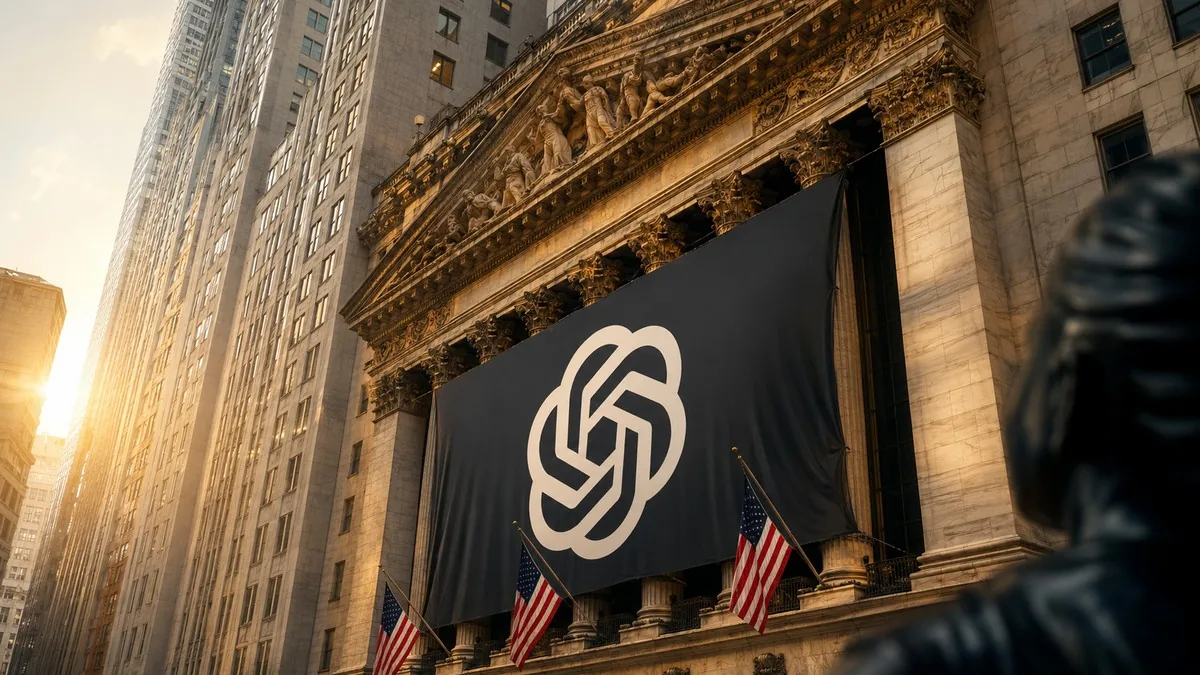
Goldman Sachs and Morgan Stanley are actively preparing OpenAI for a September 2026 IPO, targeting a valuation of approximately $730 billion at pricing—which would make it the largest technology IPO in US history, according to reporting by OpenPR and confirmed by multiple financial sources. OpenAI confidentially filed its S-1 registration statement with the SEC around May 22, 2026, with Goldman Sachs and Morgan Stanley as lead underwriters. The September timeline reverses a June 26 Reuters report that suggested OpenAI might delay its public debut to 2027.
OpenAI IPO at a glance: OpenAI is targeting a September 2026 public offering at a $730 billion floor valuation, backed by Goldman Sachs and Morgan Stanley. The company generates $2 billion per month in revenue, filed its S-1 confidentially in May 2026, and faces one material legal risk: Apple’s July 11 trade-secret lawsuit, which must be disclosed in the S-1 risk factors.
September Window Displaces the 2027 Delay Report
Reuters reported on June 26 that OpenAI was considering pushing its IPO to 2027, citing unnamed advisers and referencing a comment attributed to CFO Sarah Friar. That report has since been contradicted by current bank activity: both Goldman Sachs and Morgan Stanley are in roadshow preparation phase as of July 2026, according to OpenPR. Multiple sources indicate the June 26 account may have reflected a negotiating posture on valuation rather than an operative internal decision. Sam Altman was reported by The Decoder in June to have told advisers that a valuation below $1 trillion was a “non-starter”; subsequent bank-side activity points to a September window at a $730 billion floor price rather than an indefinite delay.
Revenue Trajectory Underpinning the $730 Billion Target
OpenAI is generating $2 billion in revenue per month as of mid-2026, according to CryptoBriefing citing data from OpenAI’s confidential filing. That growth rate is 4× faster than Alphabet and Meta at comparable stages of their development, per the same source. The $730 billion target valuation represents approximately 30× annualized revenue at the current run rate—a premium that reflects investor expectations of continued compounding as enterprise adoption of ChatGPT and the OpenAI API accelerates. Private-market investors have placed OpenAI’s valuation as high as $850 billion in secondary transactions; $730 billion is the pricing floor, not the ceiling, according to CNBC’s May 2026 reporting on the confidential filing. The scale of that enterprise adoption is documented in our coverage: OpenAI Hits 1B Users and 2 Million Businesses — What the Scale Means.
Apple’s Trade Secret Lawsuit Creates IPO Legal Overhang
Apple filed a trade-secret lawsuit against OpenAI on July 11, 2026, one day before this brief’s research date, according to TechCrunch. Trade-secret litigation from a litigant of Apple’s scale typically appears as a material risk factor in an S-1, and IPO counsel must assess whether potential damages are sufficiently bounded to proceed without pricing disruption. No source cited has confirmed the lawsuit will delay the September offering; the standard resolution is disclosure in the S-1’s risk factors section. The Apple lawsuit represents the primary identified risk to the September timeline as of July 2026.
Anthropic Is Also Racing to IPO First
Anthropic is simultaneously in IPO preparation, with Goldman Sachs and Morgan Stanley also competing for that mandate, according to Fortune’s June 2026 reporting. Parallel timelines create urgency for OpenAI to move first: the first major AI company to list publicly sets the price-to-revenue reference point for the entire sector. OpenAI’s September target, if executed, would arrive before Anthropic’s expected filing window. SpaceX’s June 12, 2026 IPO—which reached approximately $2.1 trillion in market capitalization on its first trading day, per SmartAsset data—provided both companies’ advisers with evidence that large-scale technology offerings can price and trade successfully in the current market.
For Context: The Apple Lawsuit and Anthropic’s Parallel Filing
This article is part of an ongoing sequence on OpenAI’s path to public markets and its legal exposure heading into the offering. For the full details of the underlying trade-secret claim, see our earlier report: Apple Sues OpenAI for Stealing Hardware Secrets — Full Details. On the competitive IPO landscape, Anthropic reached a $1.2 trillion secondary market valuation earlier this year, surpassing OpenAI’s private valuation at that point; that story is covered in full at Anthropic Hits $1.2T Secondary Valuation, Passes OpenAI.
OpenAI’s products—including ChatGPT, the OpenAI API, and the Codex coding agent—rank among the leading AI tools for business in 2026, the category this site tracks for enterprise decision-makers evaluating which AI software to adopt. For OpenAI’s government deal that preceded the IPO window, see OpenAI’s 5% Government Stake Deal.
Last Updated: August 2026
