

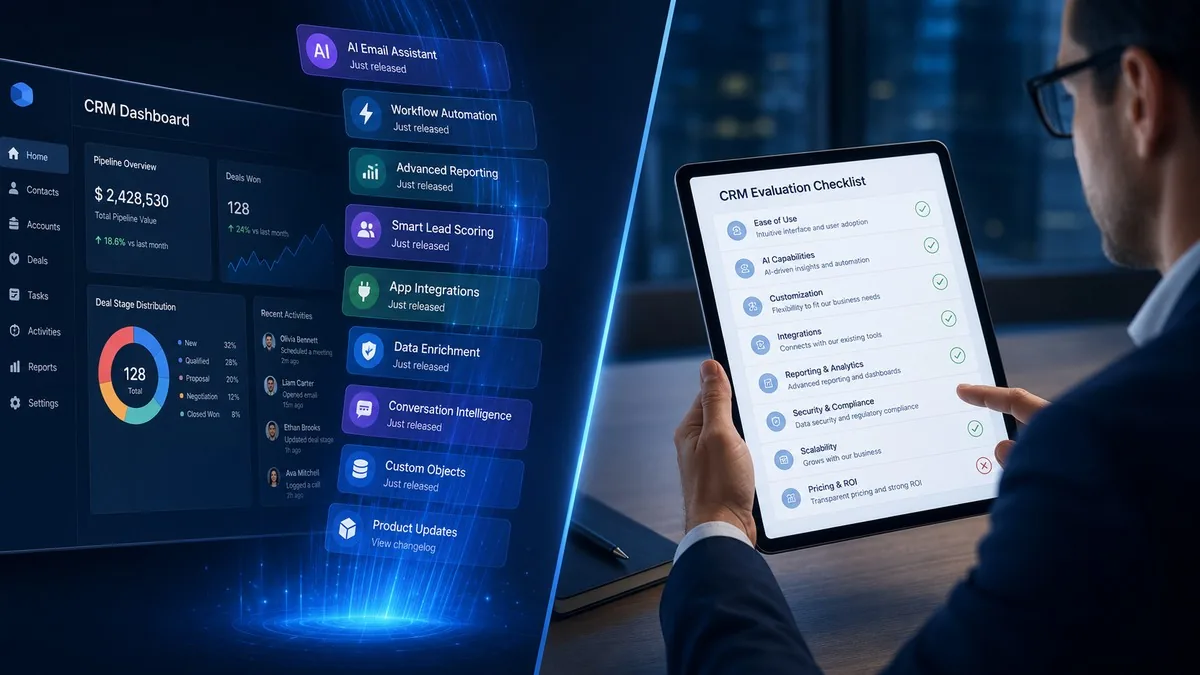
HighLevel published 500 new-feature announcements in 22 weeks between March and August 2026 — a pace of 22.7 releases per week — and AI is now its largest single release category at 15.8%, according to an independent analysis published August 18, 2026 by Zoltan Juhasz, Senior Digital Marketer and founder of NetPartners Marketing in Montreal, Canada.
HighLevel is a white-label CRM and marketing automation platform sold primarily to digital marketing agencies, which rebrand and resell it to their SMB clients. The study counted every changelog announcement HighLevel published over the 22-week window and classified each by feature category. AI-related updates outranked messaging, workflow automation, and every other feature bucket. At the measured pace, HighLevel ships more than 1,100 releases per year.
AI Releases Are Predominantly Agentic, Not Chatbot Features
HighLevel’s AI releases are predominantly agentic AI — autonomous agents that respond to CRM events, connect to external tools, and operate voice and chat channels without human prompting, according to the study summary published by Newsworthy.ai. “AI is now the largest release category, accounting for 15.8 percent of releases — ahead of messaging, workflow automation, and other features,” Juhasz wrote in the NetPartners Marketing analysis.
The first week of August 2026 illustrates the pattern. HighLevel shipped 3 notable AI updates in that single week: a private beta letting agencies run dual white-label brands from one account, an AskAI capability that builds ad campaigns, and ready-made agent templates for its Voice AI product. The study measures release volume, not release quality, and some of the counted AI features are in beta rather than general availability.
Why CRM Release Velocity Matters for Business Buyers
HighLevel’s velocity reflects an industry-wide shift rather than one vendor’s sprint. Every major CRM vendor shipped an AI agent feature in 2026, including Salesforce with Agentforce, HubSpot with Breeze, and Braze with BrazeAI. The defining pattern is the agentic CRM: AI agents that act on CRM data alongside human teams, rather than AI that only drafts copy.
This pace creates a concrete evaluation problem for buyers. A CRM comparison read 3 months ago covers a product that has since shipped roughly 270 releases, at HighLevel’s measured rate. Feature checklists compiled during a procurement cycle go stale before the contract is signed.
Buyers evaluating an AI-native CRM should therefore test 3 things directly rather than rely on published feature lists: whether the platform’s AI agents act on live CRM events such as new leads, missed calls, and abandoned carts; whether agents connect to the external tools the business already runs, such as calendars, payment processors, and ad platforms; and whether AI features sit in general availability or in beta. Agentic capability and integration depth predict usefulness; raw release counts do not. Our guide to the best AI tools for business in 2026 applies the same evaluation lens across categories beyond CRM.
Our Take
The HighLevel study is a warning signal for buyers more than a scorecard for one vendor. When a single CRM ships 500 releases in 22 weeks, static comparison content — including vendor-published comparison pages — expires in weeks. The 15.8% AI share is also a count, not a quality measure: 79 AI releases say nothing about how many survive beta. Evaluate CRMs on a live trial against your own workflows, weight agentic depth over feature volume, and re-check any comparison older than a quarter before acting on it.
For Context
- HubSpot Agent Hub lets CRM teams run AI agents together — witho2.com coverage of HubSpot’s agentic CRM launch, the closest large-vendor parallel to HighLevel’s AI push.
- Salesforce Slackbot can now pull CRM data — Salesforce’s agent-driven CRM data access, part of the same 2026 agentic-CRM wave.
- Affinity Ascend brings AI agents to CRM for investment firms — how vertical CRM vendors are shipping the same agentic pattern for niche buyers.
