

Published: July 27, 2026
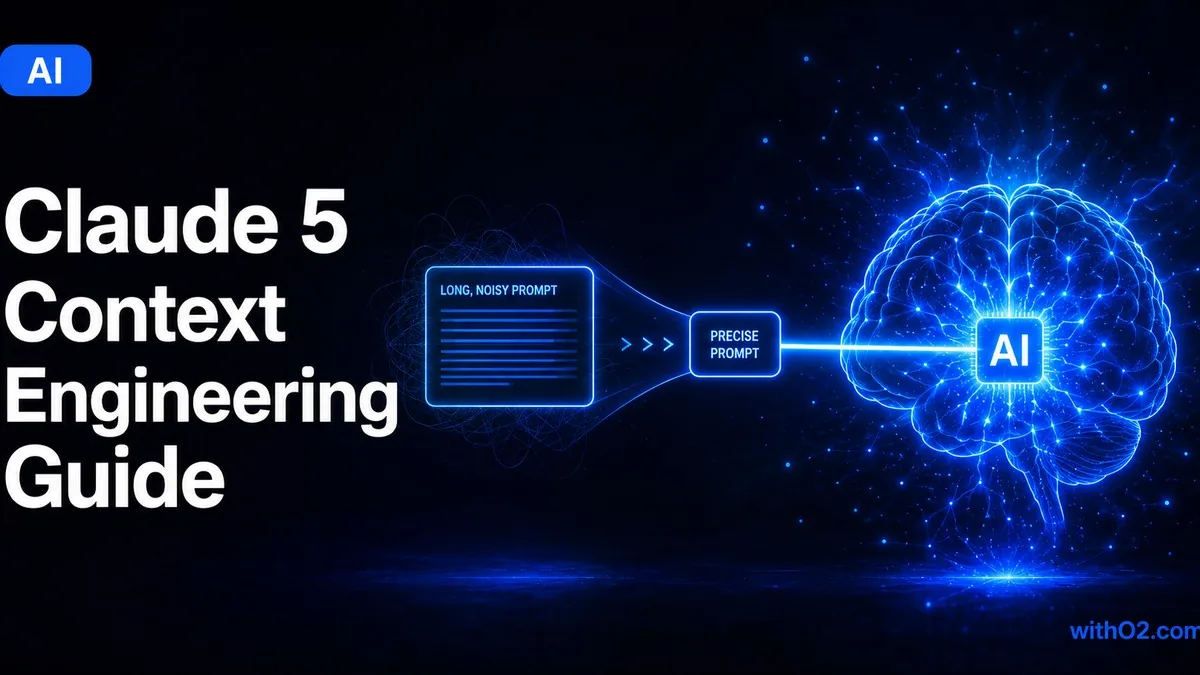
Anthropic removed more than 80% of Claude Code’s system prompt when upgrading to Claude 5-generation models and measured no loss on coding evaluations, the company revealed in a blog post published July 24, 2026. Anthropic calls the principle “unhobbling”: instructions that prevented bad behavior in older models now create conflicting signals and waste tokens in smarter models. The finding applies to Claude Opus 5 and Claude Fable 5, and it changes the setup math for businesses deploying AI agents built on Claude, because simpler context windows now outperform elaborate prompt engineering.
What Anthropic changed for Claude 5 agents
Anthropic cut Claude Code’s system prompt by more than 80% for Claude 5 models and recorded no measurable drop on coding evaluations. The company’s Applied AI team — Prithvi Rajasekaran, Ethan Dixon, Carly Ryan, and Jeremy Hadfield — had earlier defined the underlying discipline in an engineering post on context engineering, which the team distinguishes from prompt engineering.
“Context engineering is the art and science of curating what will go into the limited context window from that constantly evolving universe of possible information.” — Anthropic Applied AI team
The constraint is architectural. Transformer attention computes n² pairwise relationships for n tokens, which creates a finite attention budget. According to the Anthropic team, “every new token introduced depletes this [attention] budget by some amount, increasing the need to carefully curate the tokens available to the LLM.” Models lose focus as context grows — a phenomenon the team calls “context rot,” documented in a research.trychroma.com study. Anthropic’s guidance names a practical sweet spot of 150–300 words for system prompts on most tasks, offered as guidance rather than a hard limit.
3 techniques Anthropic recommends for long-horizon agents
Anthropic recommends 3 techniques for agents running long tasks: compaction, structured note-taking, and sub-agent architectures. Compaction summarizes a near-full context window and restarts with the summary plus recent files. Structured note-taking has the agent write progress to persistent memory files retrieved at the next session. Sub-agent architectures send specialist agents to work in clean contexts and return distilled summaries of 1,000–2,000 tokens to a coordinator. Claude Code itself uses a hybrid approach, loading a lightweight CLAUDE.md configuration file upfront and retrieving files just-in-time with glob and grep. Anthropic also shipped a /doctor command in Claude Code that rightsizes skills and CLAUDE.md files for Claude 5.
Why this lowers the cost of deploying AI agents
Businesses evaluating Claude 5-based agents for tasks such as customer support, workflow automation, and CRM operations should budget less for prompt engineering, not more. A vendor pitching elaborate system-prompt tuning for a Claude 5 deployment is selling technical debt from the previous model generation. Neither OpenAI nor Google has published equivalent long-horizon agent guidance for GPT-5.6 or Gemini, which leaves Anthropic’s playbook the most specific public reference for teams comparing AI tools for business deployment costs. The July 24 announcement drew 250 points on Hacker News by July 26, driven by developer interest in the 80% reduction figure.
Our Take
Anthropic just showed that AI agent deployment is a calibration problem, not a complexity problem. Companies that paid consultants to write 5,000-word system prompts for Claude are holding technical debt, not capability. The real cost of agent adoption is shifting from prompt-engineering hours to curating the right information sources — and that shift favors teams who keep their setups simple.
For Context
Anthropic’s Claude 5 model family has expanded quickly this year. Our earlier coverage traces the lineup this guidance applies to: Claude Opus 5 launched with near-Fable-5 intelligence at half the price, and Claude Fable 5 moved from subscriptions to usage credits in July.
