

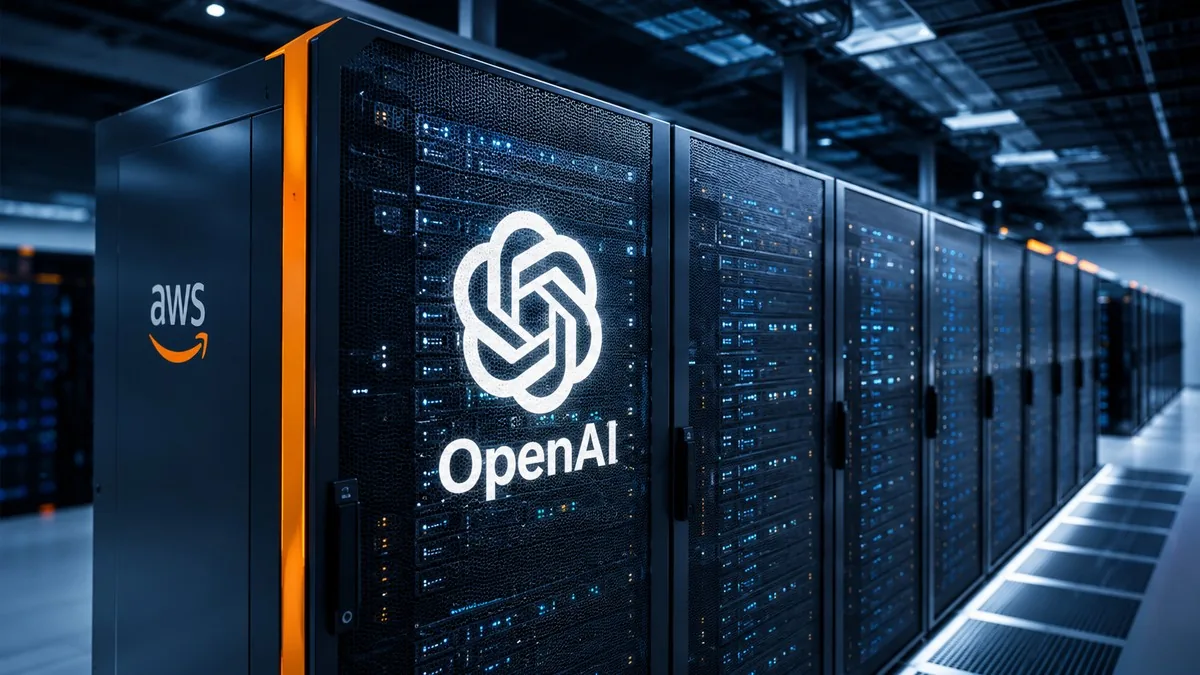
OpenAI’s models are now available on Amazon Web Services. As of June 1, 2026, enterprises can access OpenAI’s frontier models — including GPT-5 and Codex — directly through Amazon Bedrock, the same platform used to run Anthropic’s Claude, Meta’s Llama, and Mistral’s models.
This sounds like a distribution deal. It’s actually a strategic pivot that could reshape how enterprises adopt AI.
Why AWS Matters More Than It Looks
Until now, running OpenAI models at scale meant accepting Microsoft Azure as your cloud provider — or managing a direct OpenAI API integration outside your existing cloud stack. For the hundreds of thousands of enterprises that run their workloads on AWS, this was a real barrier.
It meant separate billing, separate IAM policies, separate compliance reviews, and often a separate procurement approval just to call OpenAI’s API. Many enterprise IT departments never got through that friction.
Amazon Bedrock removes all of it. Enterprises already using AWS get OpenAI models inside their existing VPC, under their existing data governance policies, billed through their existing AWS account, and accessible through the same SDKs and tools their teams already know.
What’s Available
Two products launched on Bedrock:
- OpenAI models on Amazon Bedrock — GPT-5 and other frontier models accessible via the standard Bedrock API, with full AWS security and compliance wrapping.
- Codex on Amazon Bedrock — OpenAI’s coding-specific model, available for integration into developer workflows, CI/CD pipelines, and autonomous coding agents.
Both support the same enterprise controls Bedrock customers already use: VPC isolation, CloudTrail logging, IAM role-based access, and AWS KMS encryption.
Competing Directly With Azure’s Head Start
Microsoft Azure has had exclusive enterprise deployment rights for OpenAI models since 2019. The Azure OpenAI Service is one of Azure’s fastest-growing products, and it’s been a major differentiator — a reason enterprises chose Azure over AWS for AI-first workloads.
OpenAI’s move to Bedrock ends that exclusivity in practice, even if not in name. A financial services firm running 90% of its infrastructure on AWS no longer has to spin up Azure credits just to use GPT-5. That’s a significant competitive shift for Microsoft.
It also puts OpenAI in direct competition with Anthropic, which has had Claude on Bedrock since 2023 and has built deep AWS integrations. AWS customers choosing between Claude and GPT-5 can now make that decision based purely on model quality — not infrastructure compatibility.
What This Means for Enterprise AI Budgets
For cloud architects and CIOs, this simplifies the AI vendor decision considerably:
- You can now run OpenAI, Anthropic, Meta, Mistral, and Cohere models from a single AWS account
- No separate OpenAI API keys, billing accounts, or compliance reviews
- AWS Reserved Instances and Savings Plans may apply to Bedrock usage, reducing effective costs
- Existing AWS support contracts cover Bedrock — no new vendor relationships
For development teams, Bedrock’s model router feature means you can write code that automatically selects the best model (GPT-5, Claude Opus 4.8, Llama) for each task — and switch models without changing your application code.
The Bigger Picture
This is part of a broader pattern: AI models are becoming commoditized infrastructure. OpenAI, Anthropic, and Google are all racing to make their models available everywhere — cloud platforms, on-premise servers, and edge devices. The competitive moat is shifting from “which model is better” to “which platform do enterprises already trust.”
By landing on AWS, OpenAI gets access to the enterprise relationships, compliance frameworks, and procurement processes Amazon has spent 20 years building. That’s worth more than most benchmark improvements.
Related
- Anthropic Raises $65B — Now Worth More Than OpenAI
- NVIDIA Nemotron 3 Ultra: America’s Biggest Open AI Model Launches
- Best AI Subscription 2026: ChatGPT Plus vs Claude Max vs Google AI Ultra
