

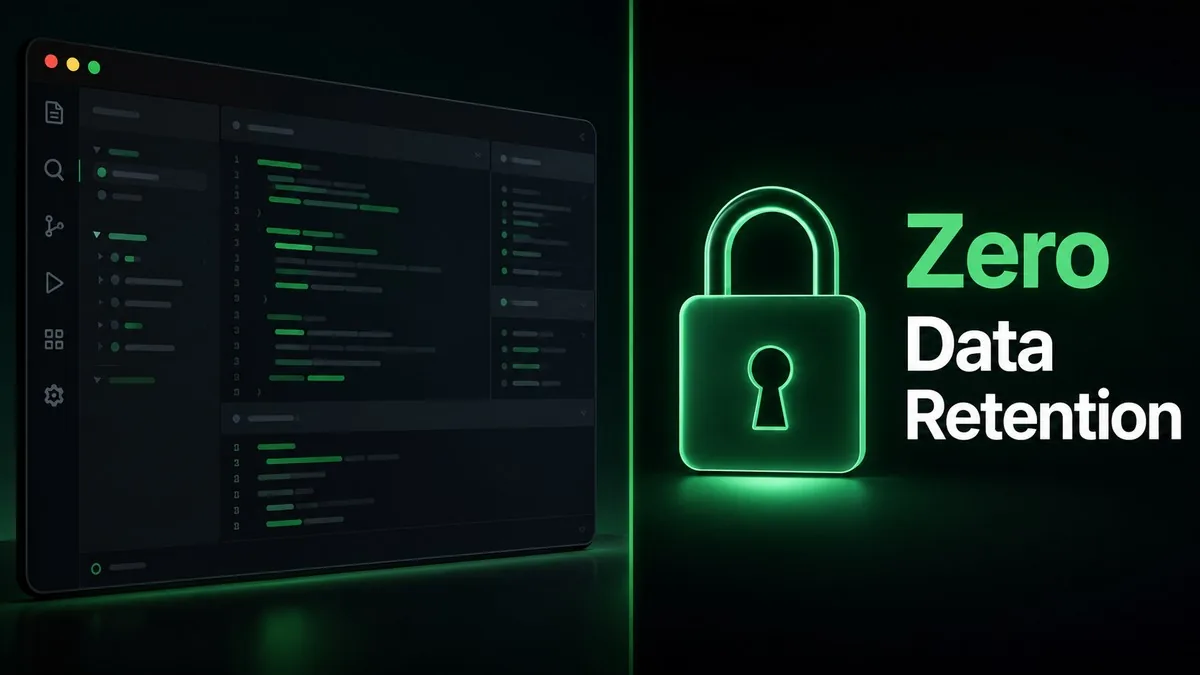
LM Studio launched Bionic on July 16, 2026 — a Mac app that turns open AI models into a full agent for coding, research, and document work, processing cloud requests under a Zero Data Retention policy. Bionic is LM Studio’s first agentic product and competes directly with ChatGPT Work and Claude Code, but runs on open models such as GLM 5.2 and Kimi K2.7 Code rather than proprietary systems from OpenAI or Anthropic.
Bionic ships as an initial preview for macOS only. It runs models locally on the user’s machine or offloads larger tasks to LM Studio Secure Cloud, where requests are not stored once processing completes. LM Studio, the dominant desktop app for running large language models locally with millions of installs, built Bionic as a separate product from its existing chat and model-runner tool.
What the LM Studio Bionic AI Agent Does
The LM Studio Bionic AI agent handles three categories of work — coding, research, and document tasks — by giving open models direct access to the local file system. In a code project, a user links a local folder and the model investigates, edits, and debugs the codebase inside that directory. For document work, Bionic organizes local directories, edits files, summarizes content, and runs native web search across 4 file types, such as documents, spreadsheets, PDFs, and code files.
Bionic also includes on-device voice transcription powered by Voxtral, Mistral AI’s speech model, so dictation runs locally without a cloud round trip. The agent’s autonomy — planning steps and using tools rather than answering a single prompt — is the same capability businesses evaluate when they compare the best AI coding assistants for autonomous development.
Why Zero Data Retention Matters for Business Buyers
Zero Data Retention means a cloud request is processed and then discarded, so no copy of the submitted data persists on LM Studio’s servers. Companies in legal, healthcare, and finance often cannot send client documents or source code to OpenAI or Anthropic under their data-handling obligations. Bionic addresses that constraint by pairing open models with either fully local execution or a Secure Cloud tier that retains nothing, giving regulated teams an agent they can point at sensitive files.
Yagil Burowski, LM Studio’s founder, framed the timing around model quality on X: “A few months ago open models have crossed an inflection point with Kimi K2.6, and recently with GLM 5.2. LM Studio Bionic is built for this moment.” Because Bionic remains an initial preview, users should expect rough edges and incomplete features compared with mature agents.
- How to Run an LLM Locally in 2026 — the local-model setup Bionic builds its privacy pitch on
- GLM-5.2: Zhipu AI’s 1M-Context Open-Source Model — one of the two open models Bionic runs by default
- Chinese AI Models Are Running US Enterprise Workloads — how open-weight models entered production stacks
Bionic is the most credible privacy-first alternative to ChatGPT Work yet. For a small-business owner who cannot feed client files to OpenAI, an agent that runs open models locally — or through a Secure Cloud tier that stores nothing — removes the single biggest blocker to adopting AI on sensitive work. The open-weight surge that GLM 5.2 and the incoming Kimi K3 weights created is what makes this timing work: open models are finally good enough that giving up the proprietary frontier costs little for everyday coding and document tasks. The catch is the “initial preview” label and the Mac-only release — treat Bionic as a pilot, not a production rollout, until it stabilizes and reaches more platforms.
Related Coverage
- Kimi K3: 2.8T Open-Weight Model Rivals Claude Fable 5 — the open weights Bionic is positioned to run
- 5 Agentic AI Security Risks Every Team Must Know in 2026 — what to check before pointing any agent at your files
Frequently Asked Questions
What is LM Studio Bionic?
LM Studio Bionic is a Mac app launched on July 16, 2026, that turns open AI models into an agent for coding, research, and document work. It runs models locally or through LM Studio Secure Cloud under a Zero Data Retention policy, and supports open models such as GLM 5.2 and Kimi K2.7 Code.
Is LM Studio Bionic private?
Yes. Bionic can run models entirely on the user’s own machine, and its Secure Cloud tier processes requests under Zero Data Retention, meaning submitted data is not stored after processing. This design targets businesses in legal, healthcare, and finance that cannot send data to OpenAI or Anthropic.
How does Bionic compare to ChatGPT Work and Claude Code?
Bionic performs the same agentic tasks — coding, research, and document work — but runs on open models instead of proprietary ones, and does not require an OpenAI or Anthropic API key. Its differentiator is privacy: local execution plus Zero Data Retention, versus the cloud-first design of ChatGPT Work and Claude Code.
Is LM Studio Bionic available on Windows?
No. Bionic launched as an initial preview for macOS only. LM Studio has not confirmed a Windows release or pricing as of the July 16, 2026 launch.
